AI adoption motivation & current maturity
Primary objective for AI/ML Adoption
- ~79% of organizations plan to integrate AI/ML into existing security and operational tools, while ~40% are currently in the pilot or PoC stage of AI adoption in cybersecurity.
Motivations for AI/ML deployment
- Organizations are adopting AI to accelerate threat detection and response, and to improve predictive analytics and proactive risk scoring.
- Industry Insights: Financial institutions are embedding AI into core security functions to strengthen resilience and meet regulatory requirements. Technology and IT service providers are focusing on continuous compliance monitoring and advanced anomaly detection.
Emerging threat landscape
Top AI-enabled attacker capabilities
- ~31% of attacks involve AI-driven supply chain compromises and coordinated multi-vector operations, while ~29% stem from autonomous malware and AI-powered zero-day exploitation.
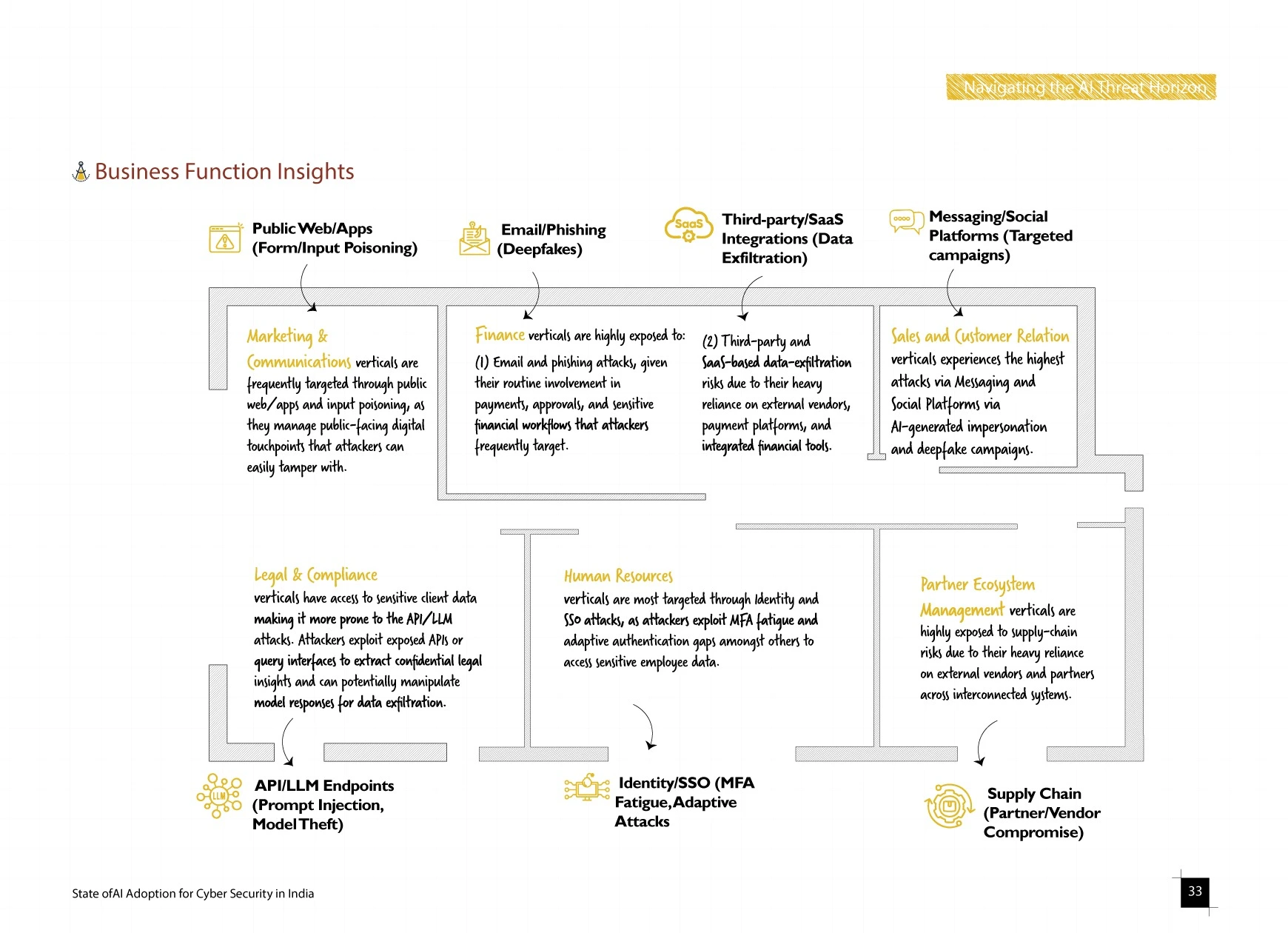
Emerging threat landscape - Business Function Insights AI-Attack Success Rates
- Highest AI-attack success rates are seen in Finance and HR teams, driven by limited AI-attack training and high exposure to social-engineering threats.
- Moderate AI-attack success rates are seen in Sales, Customer Relations, Marketing, and Partner-Ecosystem teams due to heavy external interaction, multi-device usage, and reliance on third-party SaaS platforms.
CXO Pulse Check
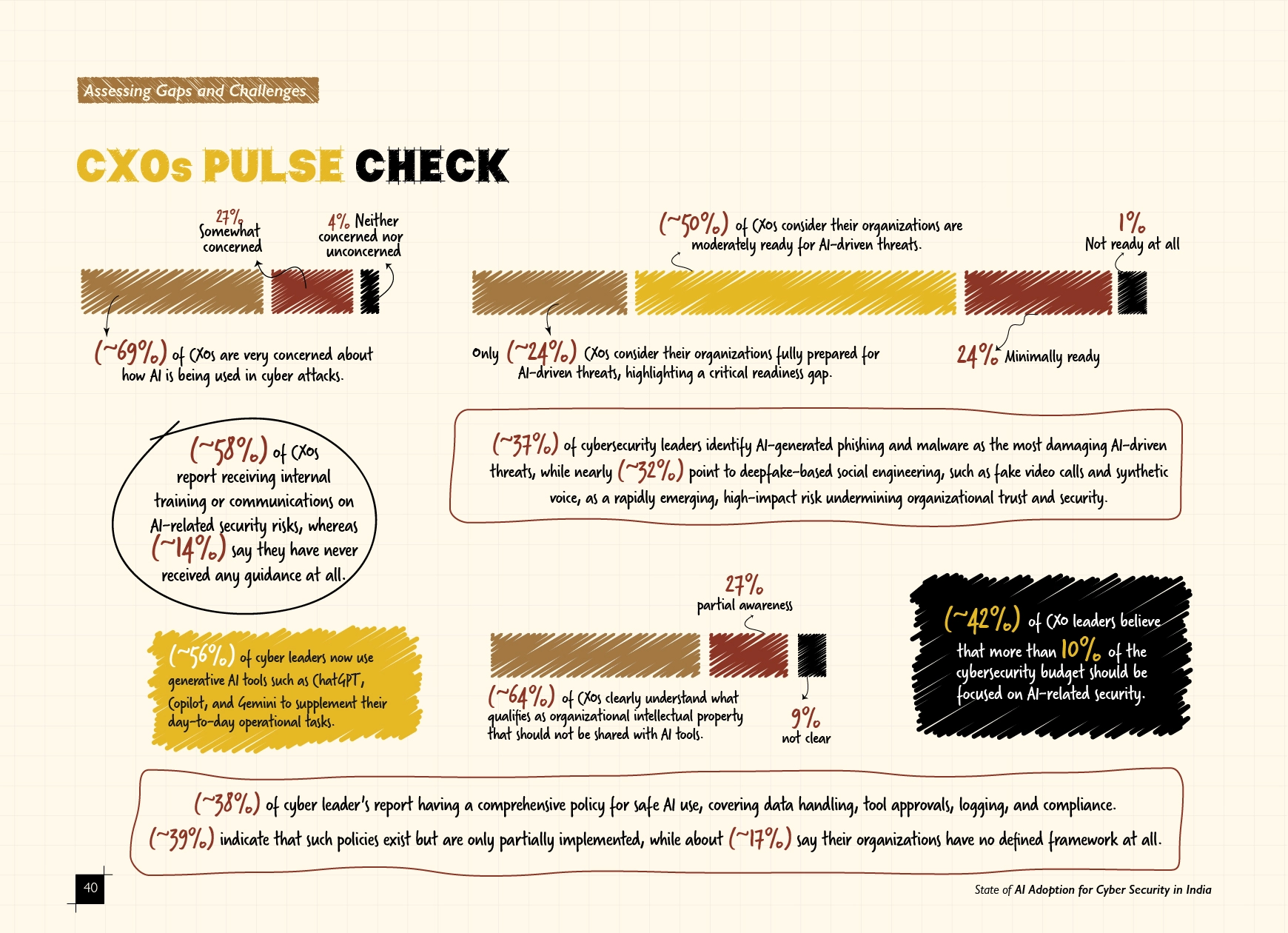
- ~42% of CXO leaders believe that more than 10% of the cybersecurity budget should be focused on AI-related security.
- ~58% of CXOs report receiving internal training or communications on AI-related security risks, whereas ~14% say they have never received any guidance at all.
Top concerns for CXOs using AI in cybersecurity
- ~23% worry about sensitive data being exposed to AI models while ~21% are concerned about inconsistent or inaccurate outputs.
Competency building & capability prioritization
Key Competencies Needed for Managing AI-Related Cybersecurity Risks
- ~19% of organizations emphasize AI risk awareness to detect hallucinations, bias, and data leakage risks, while ~16% prioritize strong data-handling judgment for secure classification, redaction, and data-sharing practices.
Emerging AI-Native Cybersecurity Roles
- AI Security Architects and Model Validators emerge as the most critical role for ~18% of organizations, highlighting the need to rigorously validate models against adversarial manipulation and drift.
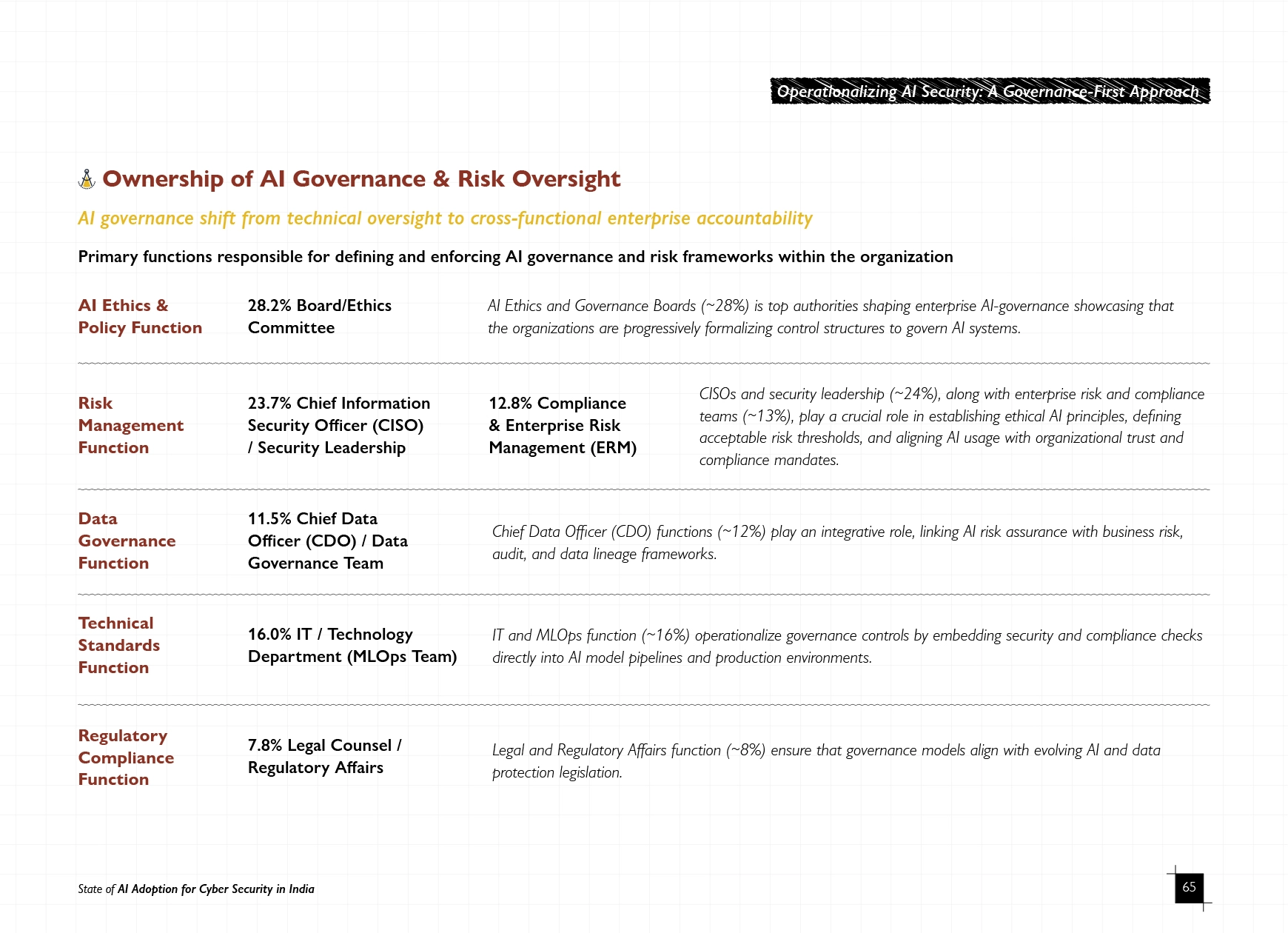
- ~15% of organizations identify AI Ethics and Policy Officers as core roles, reinforcing the importance of governance, fairness, and trust in AI systems.
Strategic future & readiness
Key Strategic Trigger
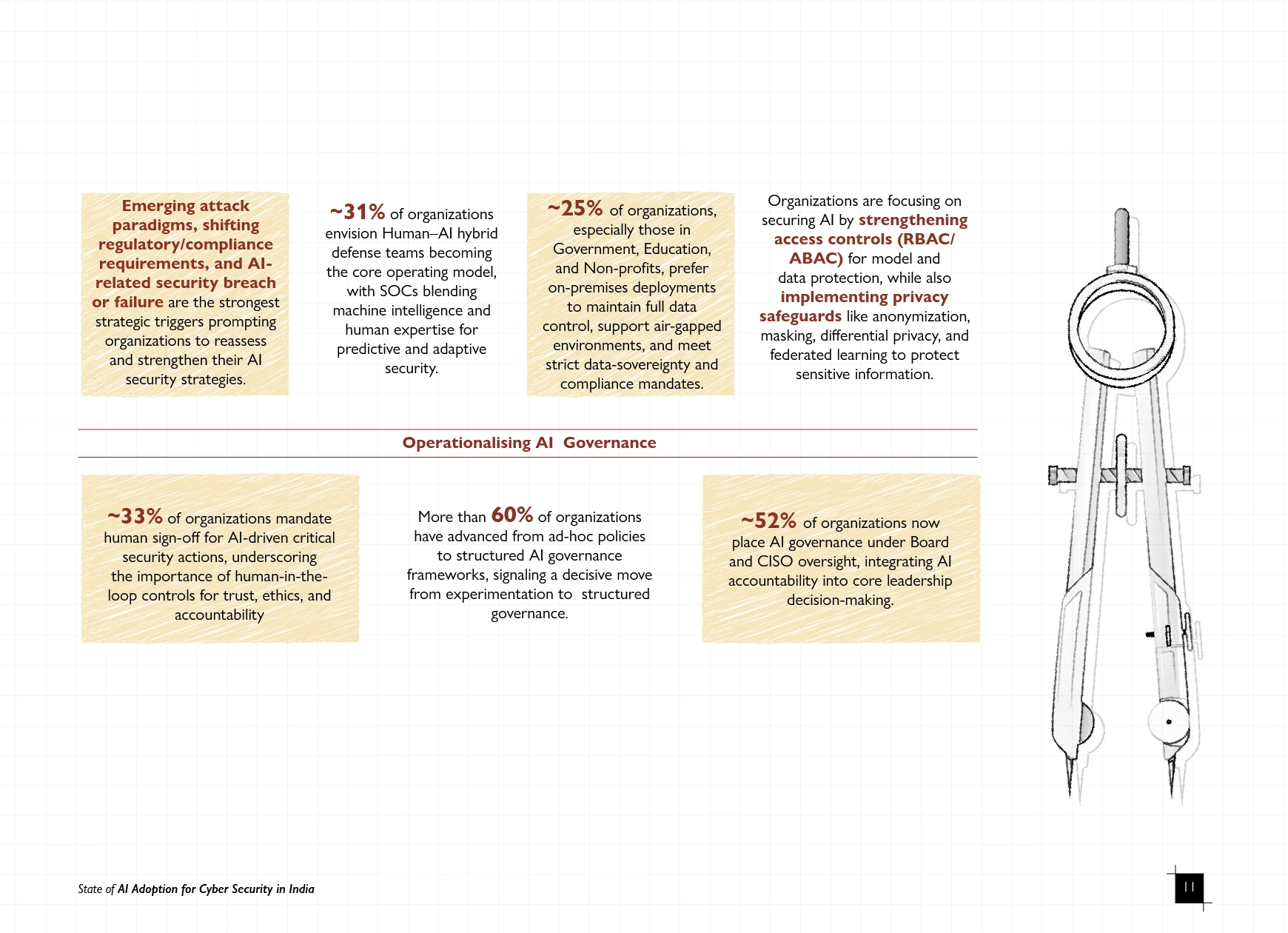
- ~23% of organizations identify Emerging Attack Paradigms as a key catalyst for re-evaluating their AI security strategy.
- ~22% of organizations cite Regulatory and Compliance shifts as major catalysts influencing their AI security strategy.
Deploying AI Models for Security
- ~25%, organizations prefer on-premises infrastructure deployment technique, driven by the need for full data control and air-gapped deployment for highly sensitive workloads.


 Dec 04, 2025
  State of AI Adoption for Cyber Security in India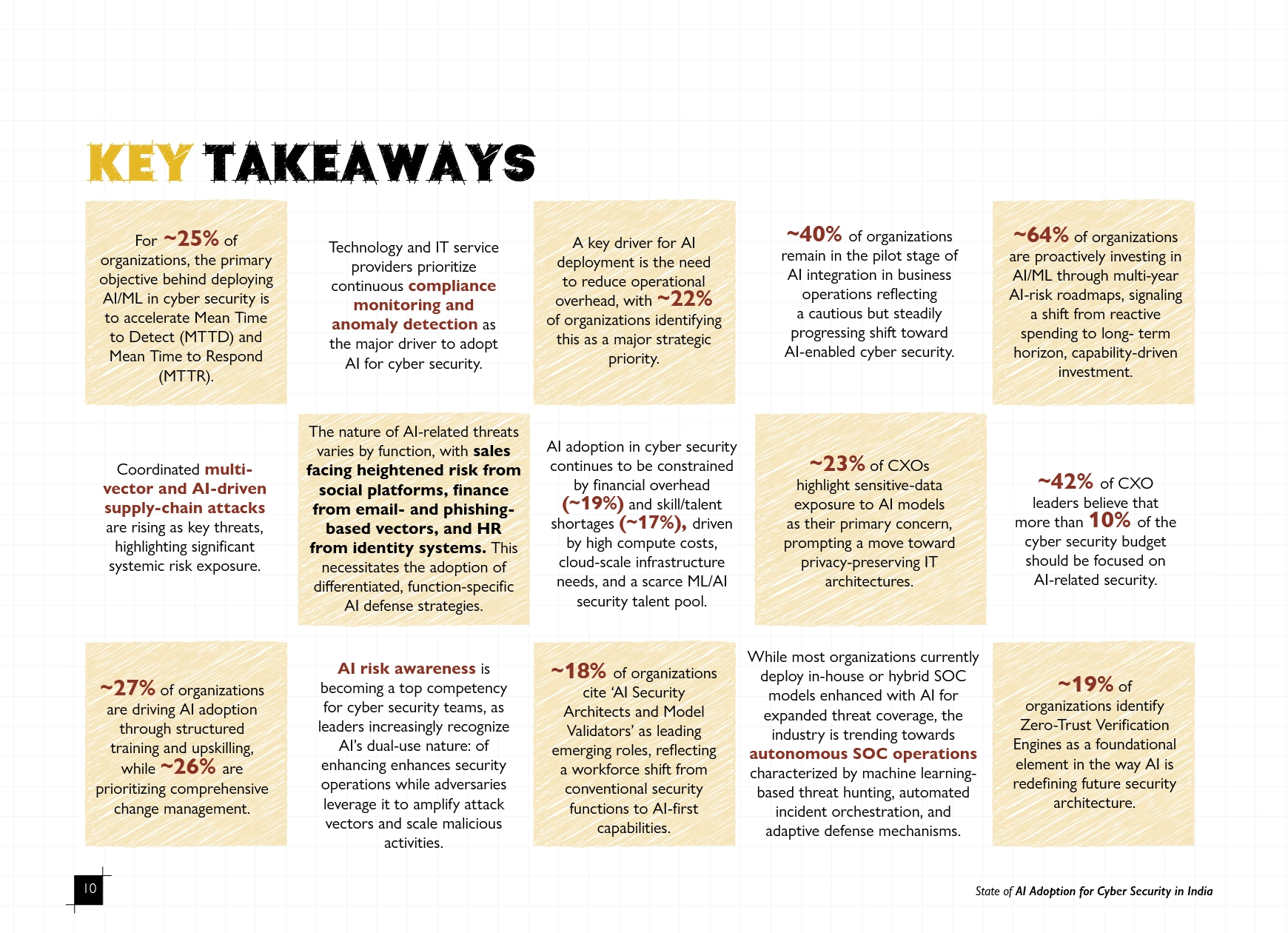
 State of AI Adoption for Cyber Security in India
